Caritas Heads to Haiti. Monitoring Trip Will Support Further Cooperation
For three years, the severe security situation in Haiti prevented workers from the Archdiocesan Caritas Olomouc (ACHO) from personally visiting local partners and projects. However, help, support, and regular communication with them continued throughout this time. In October, ACHO will embark on a one-month monitoring trip to Haiti, which will support current assistance, deepen personal cooperation with partners, and, above all, allow for the exploration of further opportunities for effective help. Haiti continues to go through an exceptionally serious security and social crisis, and the needs of the people remain enormous.
In the past, personal monitoring trips were a regular part of Archdiocesan Caritas Olomouc’s long-term assistance in Haiti. They made it possible to see firsthand how supported projects function, to meet with local partners, schools, and families, and to compare information from progress reports with the actual situation.
“Although we haven’t been able to visit Haiti personally for several years, our help and communication with local partners have not stopped. Throughout the entire time, we have been in regular contact, discussing the progress of projects, current needs, and the problems brought about by the increasingly complex situation in the country. The Sponsorship at a Distance program continued, we supported children’s education and basic healthcare, helped during emergencies, and now we are also financing the completion of a high school in Baie de Henne,” summarizes Roman Musil, ACHO’s aid coordinator in Haiti.
“We continuously monitored the projects through reports, photographs, accounting, and direct communication with people on the ground. All of this worked and continues to work,” Musil adds, stating, “but personal monitoring cannot be completely replaced by anything. After three years, we therefore need to see the situation with our own eyes again, meet the people we help as well as our partners, and think together about where to take our help next.”
The last such trip took place three years ago. The security situation subsequently deteriorated to such an extent that further personal visits were impossible. Nevertheless, ACHO’s help continued.
Now, at least in some areas, the situation is opening up the possibility of a personal return. In October, therefore, ACHO aid coordinator Roman Musil will set off for Haiti together with the new director of Archdiocesan Caritas Olomouc, Robert Neugebauer. For him, it will be his first business trip to Haiti since taking over the organization’s leadership.
“After several years, we need to see our projects right on the spot again. We want to talk to the people who run them, to the teachers, children, and local partners, to see how our help is developing in current conditions, and mainly to specify its further forms,” confirms Robert Neugebauer regarding the trip’s goal. “New partners are also joining, and for our assistance, it is crucial to ask openly and then see what local people truly need today. Haiti has changed dramatically in recent years, and we must plan our further help according to today’s reality,” adds Roman Musil.
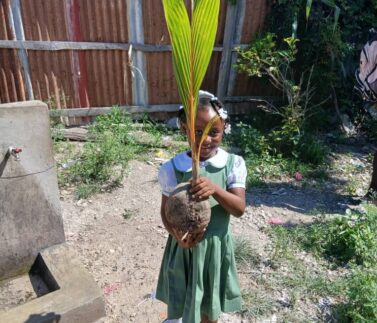
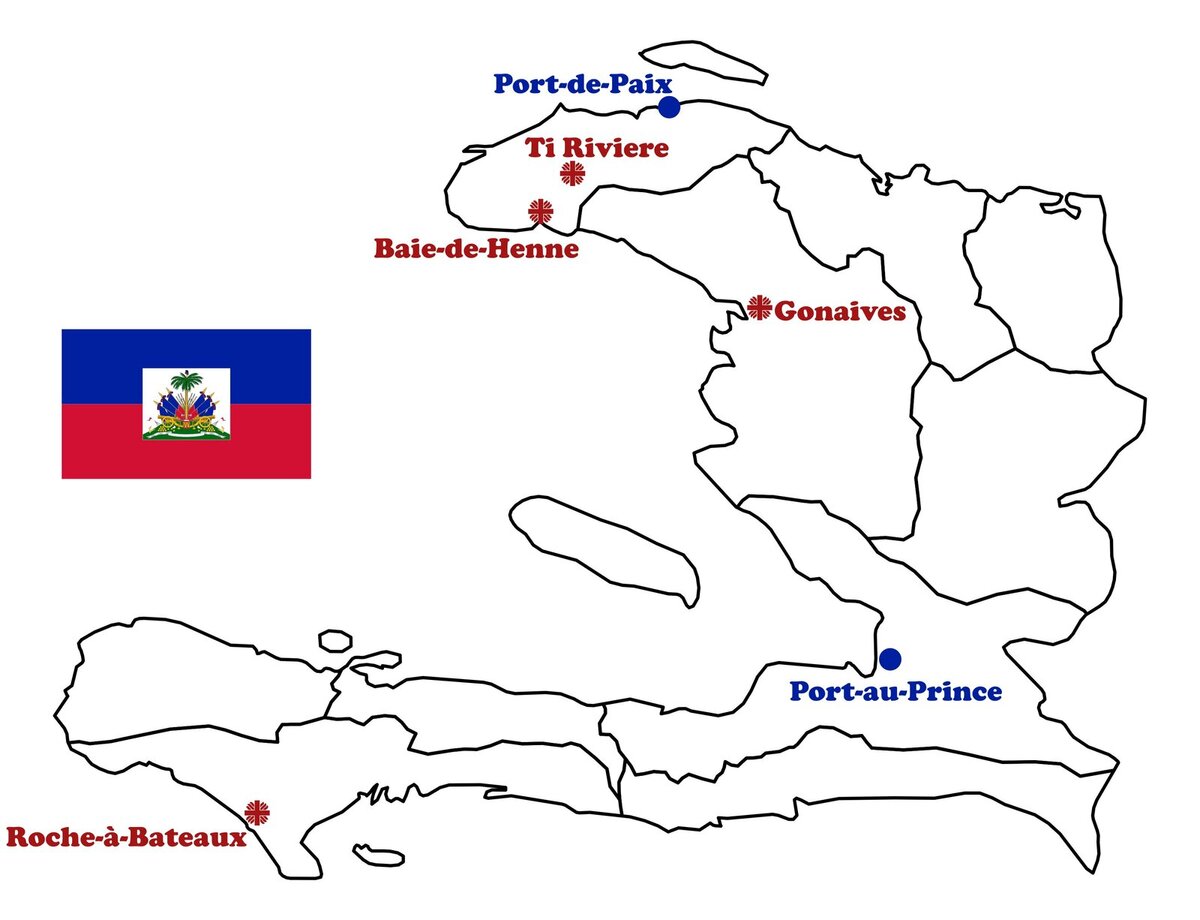
Baie de Henne: Schools, Children, and Other Community Needs An important destination will be Baie de Henne and the surrounding communities, where ACHO has been operating long-term. The team will visit partner schools and meet with local collaborators, educators, and children involved in the Sponsorship at a Distance program.
This personal visit will allow us to build on our existing cooperation and, together with local partners, open a discussion about what people need now and where further assistance can have genuine and long-lasting meaning.
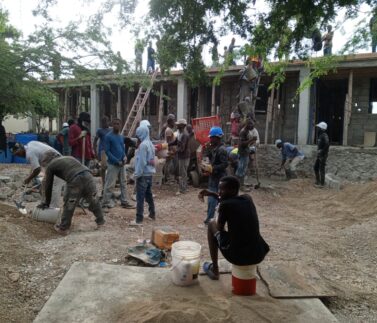
The monitoring will also include the high school under construction in Baie de Henne. Its construction has advanced significantly in recent months, and thanks to the support of donors from the Czech Republic and the involvement of the local community, the technically demanding concreting of part of the roof has been successfully completed.
Seeking New Opportunities to Help Again One of the places the team will head to is the city of Gonaïves. A meeting is planned here with religious sisters from India who previously ran a school for poor children. In the fall of 2022, however, the school was looted during violent unrest, and the sisters were forced to leave Haiti hastily.
Now, the sisters have returned to Haiti, which naturally opens up the possibility of a personal meeting right in Gonaïves and a joint assessment of whether and under what conditions it would be possible to follow up on their former work. This is not a finished project yet. “We have to discuss everything with the sisters and find out what is realistic, safe, and viable in the long term under the current conditions,” comments coordinator Musil.
Experience with Drinking Water For part of the trip, ACHO representatives will also be joined by Ivo Rožkanin from the Praga Haiti organization, which has experience in drilling wells and providing drinking water in poor areas of Haiti.
Praga Haiti is not part of Archdiocesan Caritas Olomouc and will prepare and finance its potential future activities independently. In this form of aid, there is much to build upon, thus developing further opportunities for cooperation in an area that is among the basic needs of local communities.
“There are so many needs in Haiti that it doesn’t make sense to only look at our own projects. If we can use our experience and contacts to also help people who have done good work here in the past and want to continue it, it is right to look for ways to cooperate,” adds Roman Musil, who has worked in Haiti for a long time.
Upon Returning Home The one-month monitoring mission will yield foundational data and deepen existing cooperation, helping in the decision-making process regarding the future form of Archdiocesan Caritas Olomouc’s assistance in Haiti. The return will be followed by an evaluation of the identified needs, the capabilities of local partners, and which projects ACHO can realistically support in the coming years.
The situation in Haiti remains very serious. That is exactly why it is crucial to develop and maintain personal contact with the local people, not to stop supporting them, and to look for opportunities to help where the assistance has tangible meaning.
We will continuously provide information about the preparations, the progress of the monitoring trip, and what its participants discover in Haiti.